DOWNSIZER SUPER CONTRIBUTIONS: GETTING IT RIGHT
“Downsizer” contributions let you contribute some of the proceeds from the sale of your home into superannuation – but there are several important eligibility requirements. Learn which areas the ATO says are tripping up superannuation members and ensure you get it right. Are you thinking about selling the family home in order to raise funds for retirement? Under the “downsizer” contribution scheme, individuals aged 65 years and over who sell their home may contribute sale proceeds of up to $300,000 per member as a “downsizer” superannuation contribution (which means up to $600,000 for a couple). These contributions don’t count towards your non-concessional contributions cap and can be made even if your total superannuation balance exceeds $1.6 million. You’re also exempt from the “work test” that usually applies to voluntary contributions by members aged 65 and over.
Read More
BUSHFIRES UNLIKELY TO HIT ECONOMIC GROWTH: JPMORGAN
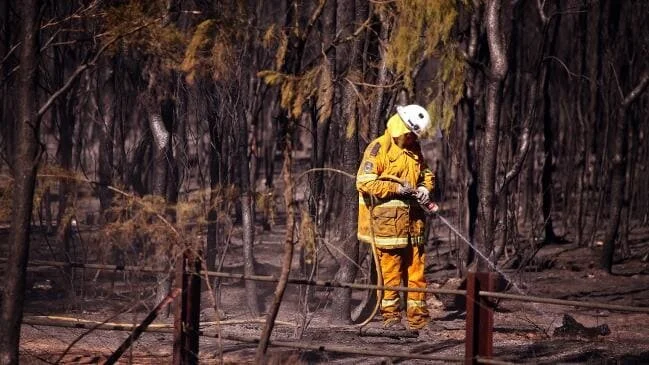
Death, destruction, loss of trading and big insurance claims from the devastating bushfire crisis won't necessarily hit gross domestic product, according to JPMorgan. Sally Auld, JPMorgan's chief economist, has called into question the wider effects of the bushfires on the economy given the regions that have been affected. The economic impact of the bushfires may not be as big as first thought according to JPMorgan. She noted that the negative, direct effects of such disasters on GDP operate mostly through production lost from disruption to infrastructure and productive capital. However, at this point most of the fires have not been in areas that are significant production contributors to GDP. "Significant bushfires, almost by tautology, occur mostly in non-productive, non-residential and non-cleared land," Ms Auld noted. While forests, animals and orchards have been damaged, it is worth noting that while total agriculture and forestry production fell 6.1 per cent in 2019, it only took 0.1 per cent off GDP over the year.
Read More
BUSHFIRE DISASTER RECOVERY
As 2020 begins, we hope all our clients have had a safe and happy new year. Sadly, we know that many people and communities are and have been impacted by the devastating bushfires currently affecting much of Australia.
Understandably, the immediate concerns remain on community safety, food and shelter. In the weeks and months ahead, it will be the time to focus on supporting and helping communities to rebuild.
Salt will provide free consulting services to help any businesses referred to us to assist them in their business recovery.
Read More
NO COST STRATEGIES TO INCREASE YOUR SUPER
With all the pandemonium of the holiday season and the end of the year rush, your super is probably the last thing on your mind. However, this is precisely the right time to think about implementing some strategies to increase your super for the coming year. With some simple, no-cost strategies such as finding your lost super, consolidating your super accounts, and making sure you’re in a fund that’s performing well, you will be well on your way to a comfortable retirement. It’s coming up to the end of another year, among all the chaotic festivities, our thoughts may turn to goals and resolutions achieved during the year. Career successes, reaching fitness goals and life milestones are all causes for celebration. While most of us wouldn’t even think twice about our superannuation, now is the perfect time to put some resolutions in place to increase your super for the new year. Afterall, it is what we’ll be relying on in retirement, and even small improvements now could mean extra luxuries later.
Read More
BETTER PROTECTION FOR CONSUMERS: NEW ASIC POWERS
In response to the recommendations of the Banking and Financial services Royal Commission and the ASIC Enforcement Review Taskforce Report, the government has proposed new enforcement and supervision powers for ASIC to restore consumer confidence in the financial system, particularly in relation to financial advice. These new powers include enhanced licencing, banning, warrant, and phone tap powers, all designed to ensure that avoidable financial disasters uncovered during the Royal Commission never repeats again. While the Banking and Financial Services Royal Commission seems long ago in the minds of many, the people that have been financially affected by dubious practitioners will no doubt carry the scar of mistrust for life. This then, is precisely why the government has introduced new laws which will give ASIC new enforcement and supervision powers in relation to the financial services sector to weed out the “bad apples” and restore consumer confidence.
Read More
PRACTISING SELF-CARE: RELAXATION, REJUVENATION AND REFLECTION
Approximately one-third of our adult life can be spent at work. Importantly, without work and the income derived from it, many of us would find it difficult to: maintain our present living costs, and, execute plans in relation to accumulating wealth to fund our future living costs. However, income is often just one reason (albeit a key one) why we front up to work each day. Other reasons can include enjoyment/satisfaction in what we do and a feeling that we are making a difference. From an income perspective, this is why insuring against its loss due to sickness, injury or disablement, is a vital consideration. And, we aren’t just insuring against a potential physical health event. For example: 45% of us will experience a mental health condition in our lifetime*, and mental health conditions are the second most common cause of income protection insurance claims, and the third most common cause of total and permanent disability (TPD) insurance claims^.
Read More
DECEMBER MARKET UPDATE
After a shaky start to the December quarter, Australian shares rebounded in November, returning 3.3%, but lost momentum in the first week of December. November’s gains were driven by strength in Health Care (+8.9% and +51.7% over 1 year), while Materials (+4.7% and +31.9% over 1 year) continues to support the index. This despite weakness from the major Financials sector, which slipped 2.1% over the month as the major banks were marked down due to the lower interest rate outlook, which doesn’t bode well for lending margins. Meanwhile, Westpac (-13.1%) was the latest to be hit with negative headlines. If returns in December hold up, the ASX 200 will be on track to deliver a return of around 26% for the 2019 calendar year, which would be the highest return investors have seen since 2009.
Read More
WILL I QUALIFY FOR THE AGE PENSION?
As we start to think about retirement, one of the first questions many of us ask is “Will I qualify for the Age Pension?” To help you understand your eligibility, we outline the basic thresholds that apply under the different means tests and what types of assets and income sources are included. Knowing whether you’ll be entitled to the Age Pension is an important part of your retirement planning. Once you reach Age Pension age (66 years from 1 July 2019), you’ll also need to pass two tests: the assets test and income test. If your eligibility works out differently under the two tests, the less favourable result applies. If you own your own home, to qualify for the full pension your “assets” must not be worth more than $258,500 (for singles) or $387,500 (for couples). For non-homeowners, these limits are $465,500 and $594,500. Above these thresholds, you may qualify for a reduced pension. However, your entitlement to the pension ceases if your assets are worth more than $567,250 (for single homeowners) or $853,000 (for couples). For non-homeowners, these limits are $774,250 and $1,060,000.
Read More
SMSF SOLE PURPOSE TEST AND FRACTIONAL INVESTMENTS
Previously, it was thought that any benefit provided directly or indirectly to members or related parties of an SMSF from an investment would contravene the sole purpose test. However, a Full Federal Court decision has reframed the sole purpose test which will provide some flexibility to trustees on certain investments. Notwithstanding this decision, investments in SMSFs remain a complex area with many pitfalls and getting it wrong could mean the fund loses concessional tax treatment along with civil and criminal penalties for trustees. To be eligible for superannuation fund tax concessions, SMSFs are required to be maintained for the sole purpose of providing retirement benefits to members, it is what is known as a sole purpose test (s 62 of the SIS Act). Failing the test could expose trustees to civil and criminal penalties in addition to the SMSF losing concessional tax treatment. Therefore, it is important when making SMSF investments that the investment does not provide a benefit directly or indirectly to members or related parties.
Read More