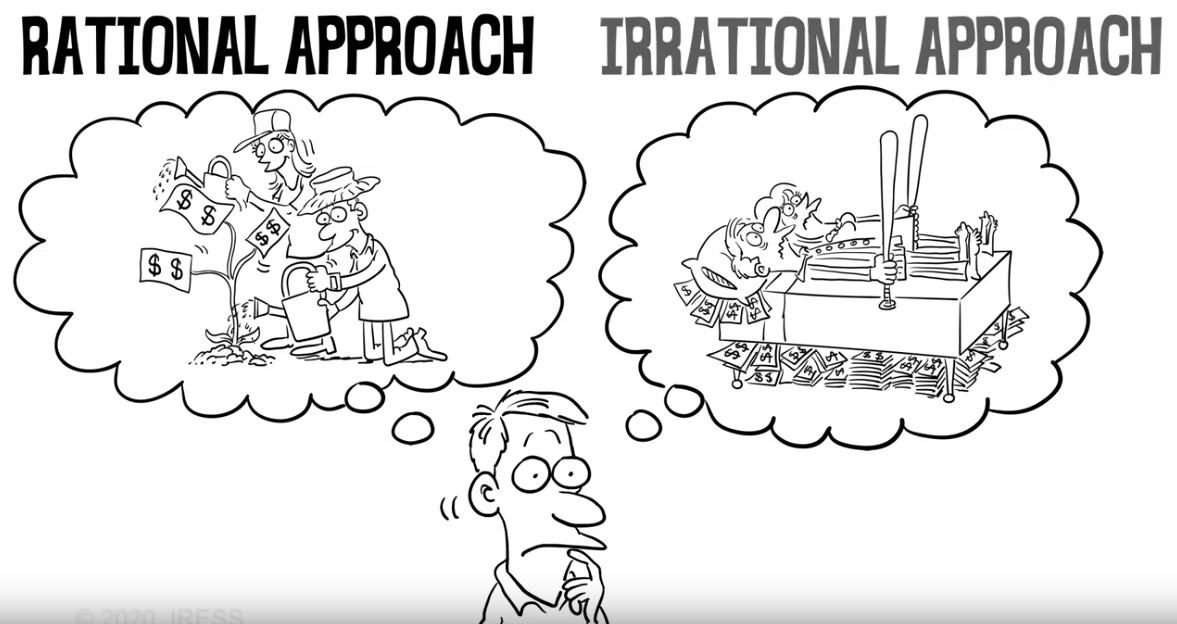
Cognitive bias: Loss aversion animation
In broad terms, traditional finance theory assumes we make decisions in a rational and unbiased manner. Whereas, behavioural finance theory states that this in fact isn’t always the case.
For example, when making decisions that affect our financial wellbeing, there can be a behaviour gap between what we potentially should do and what we actually do. Cognitive bias can play a part in this behaviour gap.
Read More
ATO scam calls may be a thing of the past
Last year, some 107,000 ATO impersonation scam calls were reported to the authorities, the real number is likely to be much higher given that most of these calls go unreported. The scammers are increasingly using technological advances to appear more legitimate and nab unsuspecting victims. One technique commonly used by these conmen is spoofing, where software overstamps an overseas number with an Australian number, typically that of the ATO.
Read More
Government contracts and the STR
Businesses wanting to participate in the Federal Government’s post-COVID-19 economic recovery projects need to be aware that they may need to obtain a statement of tax record (STR) from the ATO prior to the commencement of any tender process. Any contracts over $4m (including GST) will require a STR which basically shows whether a business has had satisfactory engagement with the tax system including registration and lodgement obligations.
Read More
COVID-19 effects on rental property owners
The COVID-19 pandemic’s knock-on effect on the economy has meant that many landlords are feeling the strain as their tenants seek to delay paying rent or reducing rent in response to job loss. To reduce the uncertainty for landlords, the ATO has provided some guidance on the deductibility of certain expenses in various situations including guidance for those that own short-term accommodation.
Read More
Risks involved in consolidating super
By some estimates there are around $20.8bn in lost and unclaimed super in Australia. The last financial year saw $4.38bn worth of lost super reunited with their owners across 537,000 accounts. While consolidating super is one of the easiest ways to reduce fees and increase the money available for retirement, recent analysis by ASIC shows that it needs to be done in an appropriate way for members to gain benefits.
Read More
JobKeeper: ATO compliance on “schemes”
Businesses that have applied for the JobKeeper now have some certainty on the integrity provision contained in the legislation. The ATO has released details of its administrative approach, in particular when it will apply compliance resources to investigate whether there has been breaches of the law. In general, it notes that it would only apply resources to what it terms “schemes”, the determination of which would depend on individual circumstances.
Read More
EOFY planning tips: Give your finances a boost
As we approach 30 June 2020, and subsequently provide information on our EOFY planning tips, we are mindful that some of us may be in a different financial situation than last year due to the COVID-19 pandemic.
Given this, we have also included information that may be beneficial in this respect. However, as with any of the tips provided below, it’s vital to assess the relevance to your personal circumstances before taking action.
Read More
The potential long-term impact of accessing super early
Super is an integral part of Australia’s three-pillar retirement income system. In a nutshell, super is a tax-effective long-term investment structure to assist in accumulating wealth while working, which will then be used to generate income during retirement.
Providing support in retirement, is a core purpose of super. And, death aside, the main conditions of release broadly operate in conjunction with this.
Read More
How can a Mortgage Broker help during the Covid 19 crisis?
We’re all living in unprecedented times. The world feels like it has turned on its head and if you’re one of the unfortunate Australians who has either had a family member or friend sick with the Coronavirus who has had their employment affected by it, you’re probably feeling like there is no end in sight.
If you have been affected financially and you have a mortgage, you’ll be looking for ways to ease the burden.
Read More